What's the Difference Between a Regular Cleaning and a Deep Cleaning?
A “deep cleaning” sounds like something done to a house, not a smile. So, what exactly is it? And why can’t the hygienist just do the “regular” cleaning that insurance o en covers at 100%?
It is a common question we hear often here in Littleton, CO, and the answer comes down to the health of your gums.
The Real Name: Non-Surgical Periodontal Therapy
When hygienists use the term “deep cleaning,” they are referring to Non-Surgical Periodontal Therapy. This is the vital first step in controlling periodontal (gum) disease.
This condition stems from an aggressive bacterial invasion beneath your gumline. In this dark, hidden environment, bacteria use the natural minerals in your saliva to construct a hardened, rock-like substance known as tartar (or calculus). Because tartar becomes firmly “cemented” to the root structures of your teeth, it is completely impossible to brush or floss away at home.
In response to this hidden bacterial stronghold, your body triggers an aggressive immune reaction. What begins as simple inflammation quickly escalates into a destructive process. In a desperate attempt to rid itself of the infection, your immune system begins breaking down the surrounding bone tissue. Essentially, your body tries to eliminate the bacteria by removing the entire anchor — the tooth itself.
Because this tartar is so highly calcified and dense, it frequently shows up clearly on your dental X-rays as distinct, triangular spurs clinging to the roots. Left untreated, this process destroys the bone supporting your smile, leading to tooth loss. Further more, medical research links this chronic, systemic inflammation to serious overall health conditions, including heart disease and diabetes.
The In-Between Stage: Scaling in the Presence of Inflammation
What happens if you have started to build some tartar, and your gums are red, puffy, and bleeding, but your bone level is still perfectly intact? This early stage of gum disease is called gingivitis.
When you have gingivitis, a standard “prophy” isn’t quite enough, but you don’t need a full deep cleaning yet either. Instead, your hygienist will perform a specialized service called Scaling in the Presence of Inflammation, often referred to as an “inflammation scaling”. During this procedure, the hygienist focuses on removing the heavy tartar buildup and aggressive plaque that is actively irritating your gum tissue. Because gingivitis is completely reversible, this targeted cleaning acts as an emergency intervention to calm the intense in amma on before it can mutate into permanent bone loss.
Why a "Regular" Cleaning Isn't Enough for Periodontitis
Once true periodontal disease is diagnosed (meaning bone loss has actually occurred), a simple “prophy” can no longer sufficiently fight the bacteria in your mouth.
- Regular Cleaning (Prophylaxis): This is a preventative treatment. It aims mainly above the gumline to remove soft plaque and fresh tartar before they can migrate deeper.
- Deep Cleaning (Periodontal Therapy): This is a therapeutic treatment. It is required after bacteria have already slipped beneath the gumline, triggering an inflammatory response that causes bleeding and bone loss.
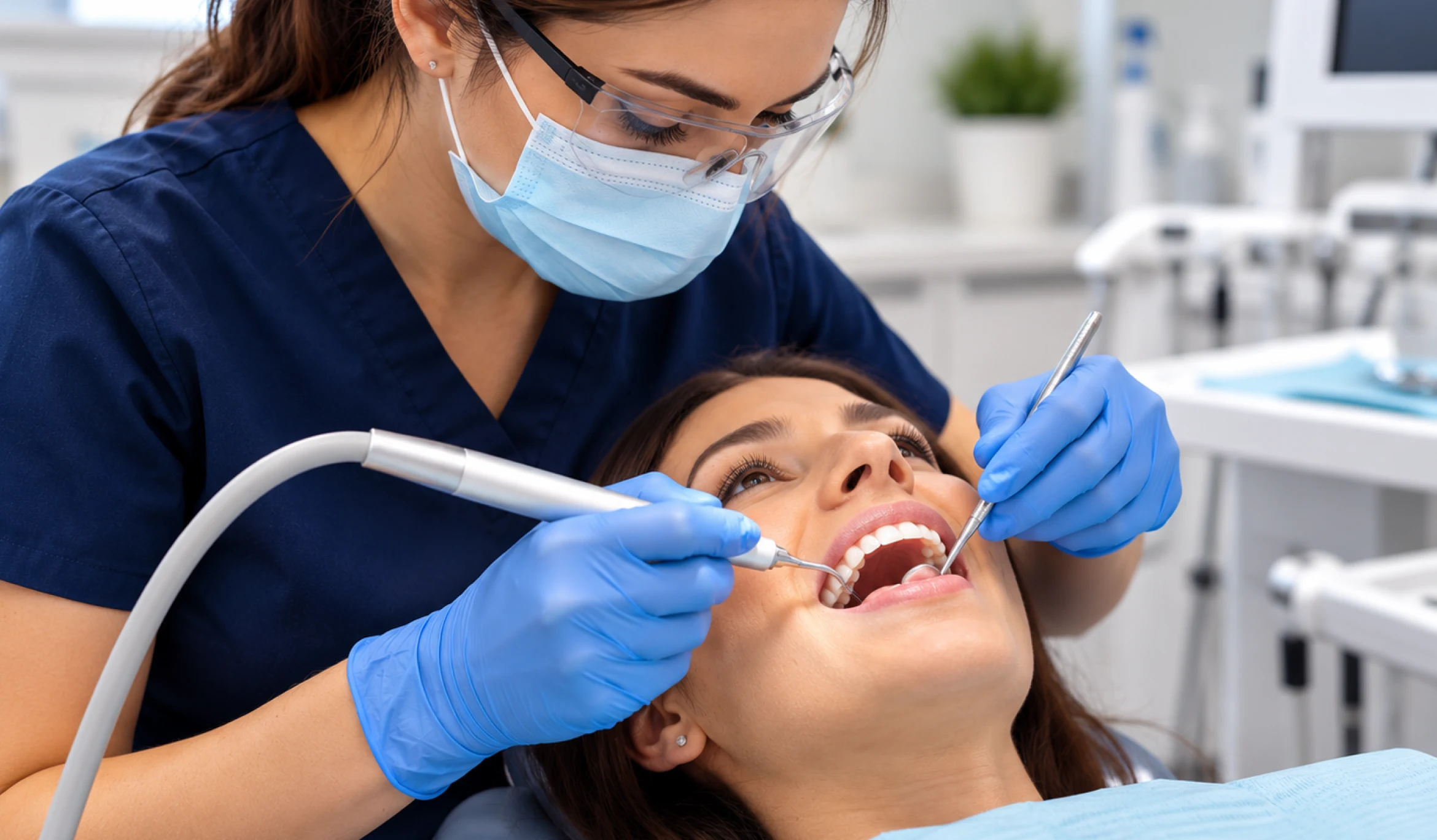
Because a true deep cleaning goes deep beneath the gum tissue to scale the roots of your teeth, your hygienist will typically numb your gums and teeth. This is done using a local anesthetic — just like a dentist does before a filling — to ensure you remain completely comfortable.
What Happens After the Deep Cleaning?
After a deep cleaning, lost bone level cannot return to normal, but the gums are finally able to start to re-adhere to the root structure. This healing is where Periodontal Maintenance appointments come into play.
Healing is not immediate with periodontal disease, and it is not necessarily permanent. Anyone with bone loss is automatically at a higher risk for further bone loss in the future. Because of this, more frequent cleaning intervals are imperative so your hygienist can closely check your bone levels and safely remove new tartar before it can cause more damage. This long-term care usually requires specialized maintenance cleanings every three to four months instead of the standard twice a year.
The Hidden Risk of Getting the Wrong Cleaning
You might wonder, “Can’t you just do the regular cleaning anyway?”
Doing an improper cleaning type in the presence of gum disease is actually dangerous. If we only clean above the gumline, the upper portion of your gums will heal and tighten. This traps the active bacteria and hard tartar deep on the root structure, which can lead to a painful, serious infection.
We Are Rooting for Your Health
Your hygienist isn’t being difficult by refusing to do a standard “prophy.” They are simply adhering to a medical standard of care and looking out for your long-term health. Whether you need a regular preventative visit to keep tartar from forming, an inflammation scaling to reverse gingivitis, or a therapeutic deep cleaning to stop bone loss, our Littleton, CO team is here to support you.
Frequently asked questions
It depends on your plan — many insurers cover periodontal therapy differently than a routine cleaning, sometimes with a deductible or coinsurance. Our team can check your benefits, and our In-Ofice Dental Plan is available if you're uninsured.
Your gums and teeth are numbed with a topical or local anesthetic first, so the procedure itself is comfortable. Some tenderness for a day or two afterward is normal.
Most deep cleanings are done over one or two visits, treating one half of the mouth at a time, though this can vary based on how much tartar and inflammation is present. Your hygienist at Southwest Family Dentistry will give you personalized recommendations based off of your needs and goals.
Most patients move to a periodontal maintenance schedule of every three to four months instead of the standard twice a year, so your hygienist can monitor healing and catch new tartar early.
Whatever Cleaning You Need, We’ve Got You
Anxious about a deep cleaning? Our No-Judgment Guarantee means gentle numbing, a clear explanation of every step, and zero lectures about how you got here. Worried about cost without insurance? Our In-Office Dental Plan gives uninsured patients an affordable path to the periodontal care they need. Ready to protect your smile? Schedule online or call our Littleton, CO office today.
Sources – Cleveland Clinic. (2023, April 20). Bleeding gums: Causes & treatment. Cleveland Clinic. clevelandclinic.org
Cleveland Clinic. (2023, April 20). Gingivitis: Symptoms & how to treat it. Cleveland Clinic. clevelandclinic.org
Mayo Clinic. (2023, February 24). Gingivitis – Symptoms and causes. Mayo Clinic. mayoclinic.org
Mayo Clinic. (2023, February 24). Periodontitis – Symptoms and causes. Mayo Clinic. mayoclinic.org