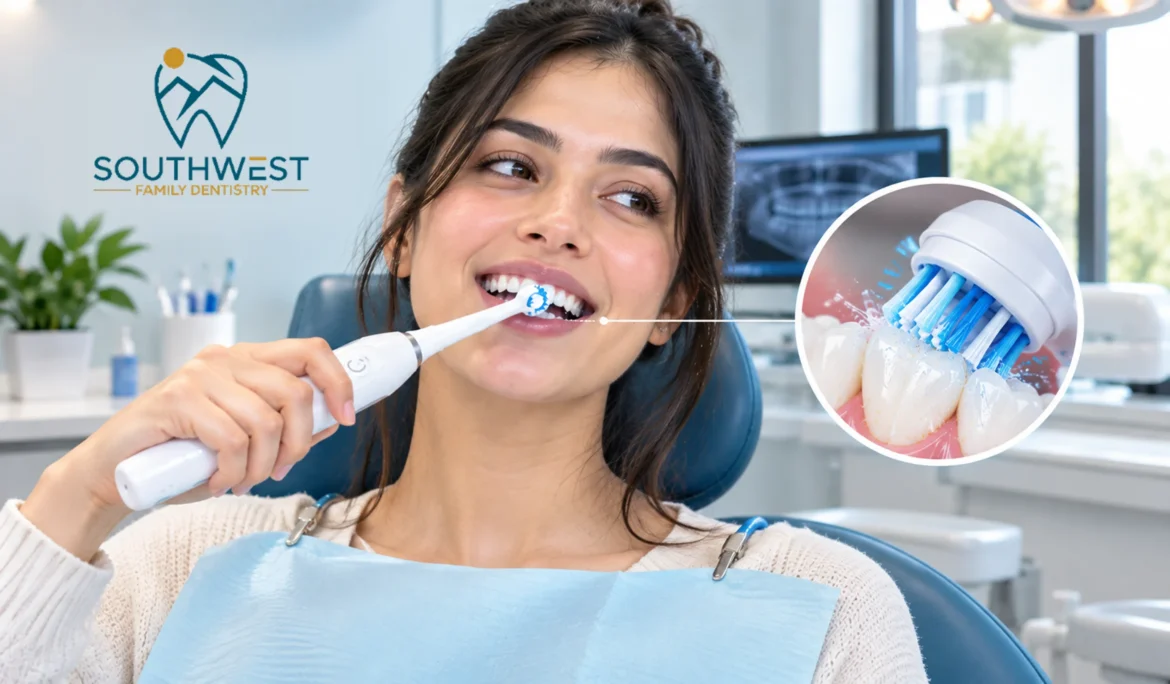
Electric vs. Manual Toothbrush: Does It Actually Matter?
The Real Data on Plaque Removal
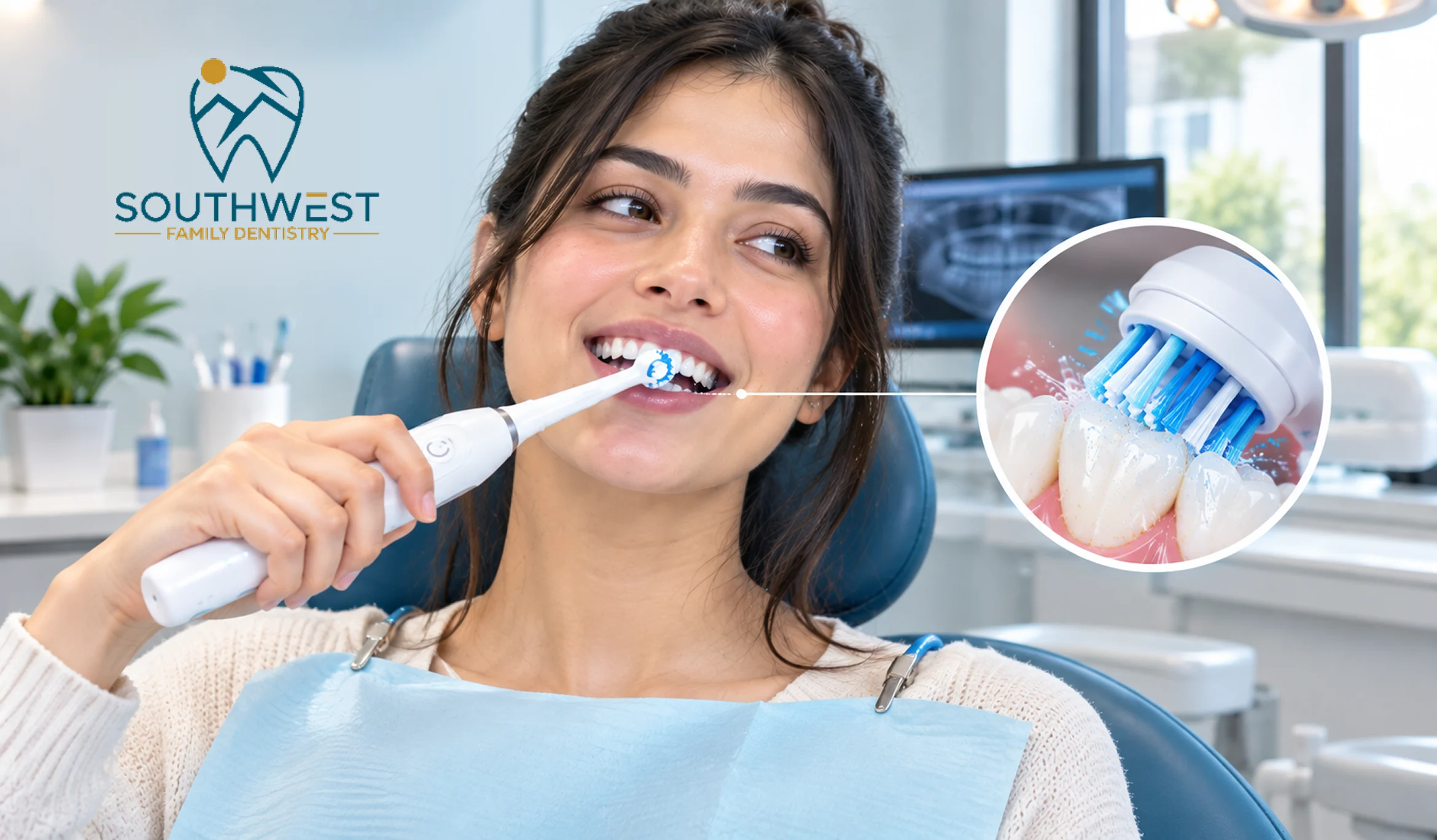
- Immediate Results: Research shows a measurable decrease in plaque after a single use of an electric toothbrush compared to a manual one.
- Long-Term Protection: Data compiled by the Cochrane Library reveals that after three months of use, electric toothbrushes remove 21% more plaque than manual alternatives.
Why Does Removing Plaque Matter?
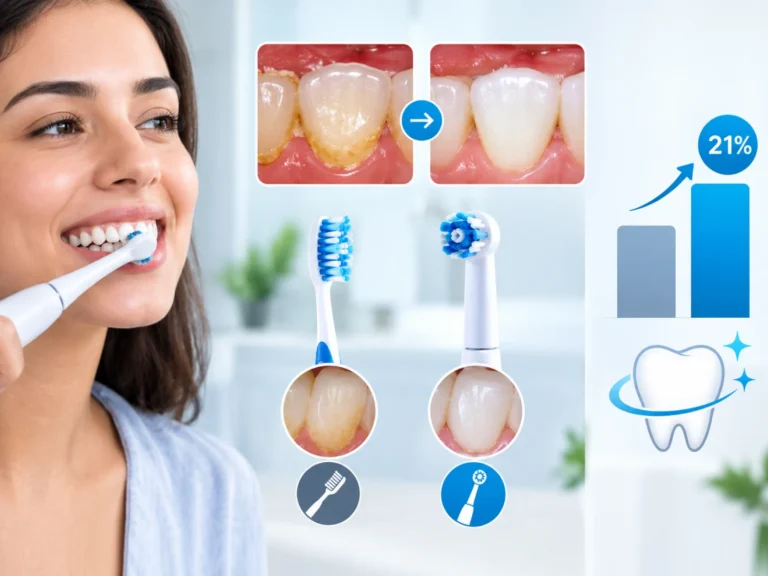
You might wonder why we talk so much about plaque. Plaque is a sticky film of bacteria that constantly forms on your teeth after eating. It is the root cause of almost every single major dental problem you can face (cavities, some dental infections, and every form of gum disease).
When plaque is left to sit on your teeth, the bacteria produce harmful acids that eat away at your enamel, leading directly to cavities. Over time, if plaque builds up along and under the gumline, it triggers an inflammatory response. This causes gingivitis (early gum disease) which, if left unchecked, progresses into severe gum disease (periodontitis) and deep infections that can destroy the bone supporting your teeth. Simply put: eliminating plaque is your first line of defense against painful dental issues.
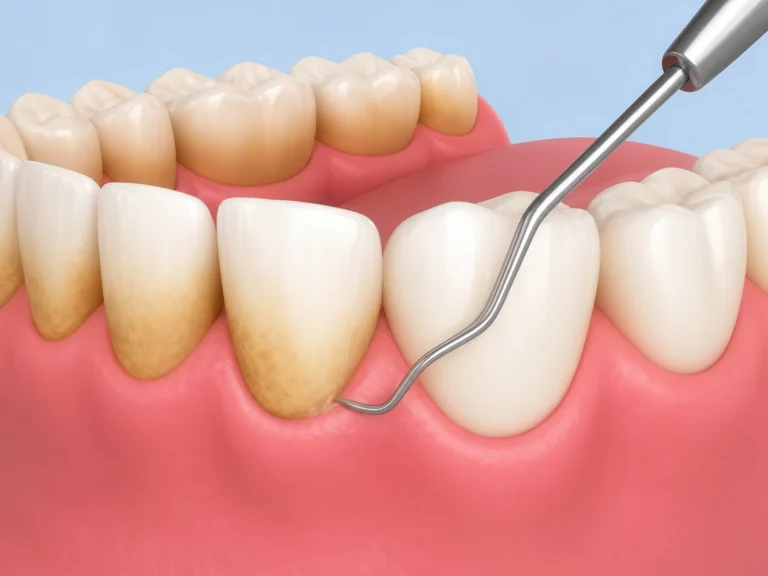
Reversing Gingivitis and Saving Teeth
Over time, this superior cleaning power adds up. A long-term, 11-year observational study found that individuals who consistently used electric toothbrushes retained 20% more of their natural teeth than manual brush users.
Why Electric Brushes Win the Battle
It isn’t just about the mechanics; it is also about human behavior.
- Built-in Timers: Most people only brush for 45 to 70 seconds with a manual toothbrush. Electric models feature timers to ensure you reach the dentist-recommended two minutes.
- Built-in Pressure Sensors: Many modern electric models alert you if you brush too hard, protecting your tooth enamel and preventing tissue damage.
A Hygienist's Perspective: The "Cleaner Mouth" Illusion
As a dental hygienist, I frequently hear patients tell me they prefer manual brushes because aggressive scrubbing makes their mouth feel “cleaner.”
In reality, that squeaky-clean sensation usually means you are applying far too much pressure. Overly aggressive scrubbing with a manual brush doesn’t clean better — it actually causes gum recession and can permanently wear down your enamel. This is exactly where the built-in pressure sensor of an electric toothbrush makes a massive difference. It forces you to let the bristles do the work, protecting your gums from damage while delivering a genuinely deeper clean.
Hygienist Tip: Aim for the Gumline
No matter which brush you choose, technique is everything. A common mistake I see patients make is focusing entirely on the surfaces of the teeth. Remember that dental plaque loves to hide right at the gumline. To get the best clean possible, always make sure your toothbrush is hitting not just the tooth surface, but also right along the gumline where the tooth meets the tissue. Tilting your brush at a 45-degree angle toward the gums will help sweep away that stubborn, hidden plaque at and slightly under the gumline.
Ready for a Professional Clean? Visit Southwest Family Dentistry
Even with the best electric toothbrush in the world, home brushing can only remove soft plaque. Once plaque sits on your teeth, it mixes with minerals in your saliva and hardens into tartar (calculus). Tartar cannot be removed by any toothbrush at home — it requires specialized professional dental tools to safely scrape it away.
Frequently Asked Questions
Every three months, or sooner if the bristles look frayed. Worn bristles clean less effectively and won't
protect your enamel the way a fresh brush will.
Yes — many brands make sizes and modes designed for children, and the built-in timer actually helps kids learn to brush for the full two minutes.
Used correctly, no. Most electric toothbrushes include a pressure sensor that alerts you when you're brushing too hard, which protects your gums better than typical manual brushing.
For most patients, electric wins — but a manual brush used with the right gentle technique (a 45-degree angle at the gumline, two full minutes, twice daily) can still keep your mouth healthy. Ask your Southwest Family Dentistry hygienist for a technique check at your next cleaning.
Don’t Let Tartar Build Up — Book Your Cleaning
At Southwest Family Dentistry in Littleton, CO, every routine cleaning comes with our No-Judgment Guarantee — no lectures, just honest, supportive care. No insurance? Our In-Office Dental Plan gives uninsured patients affordable, membership-based access to preventive care like cleanings and exams. Schedule your visit online or call our Littleton office today.
Sources (APA 7th Edition) – American Dental Association. (n.d.). Should you use an electric toothbrush or a manual? Consumer Reports. consumerreports.org/health/toothbrushes/electric-toothbrush-or-manual-a3193343159/ Pitchika, V., Pink, C., Völzke, H., Welk, A., Kocher, T., & Holtfreter, B. (2019). Long-term impact of powered toothbrush on oral health: 11-year cohort study. Journal of Clinical Periodontology, 46(7), 713–722. Yaacob, M., Worthington, H. V., Deacon, S. A., Deery, C., Walmsley, A. D., Robinson, P. G., & Glenny, A. M. (2014). Powered/electric toothbrushes compared to manual toothbrushes for maintaining oral health. Cochrane Database of Systematic Reviews, (6).